
Post-It Games for Vocabulary Review
There are a few things that I look for in a game. One is that it is engaging and students will be willing to participate.

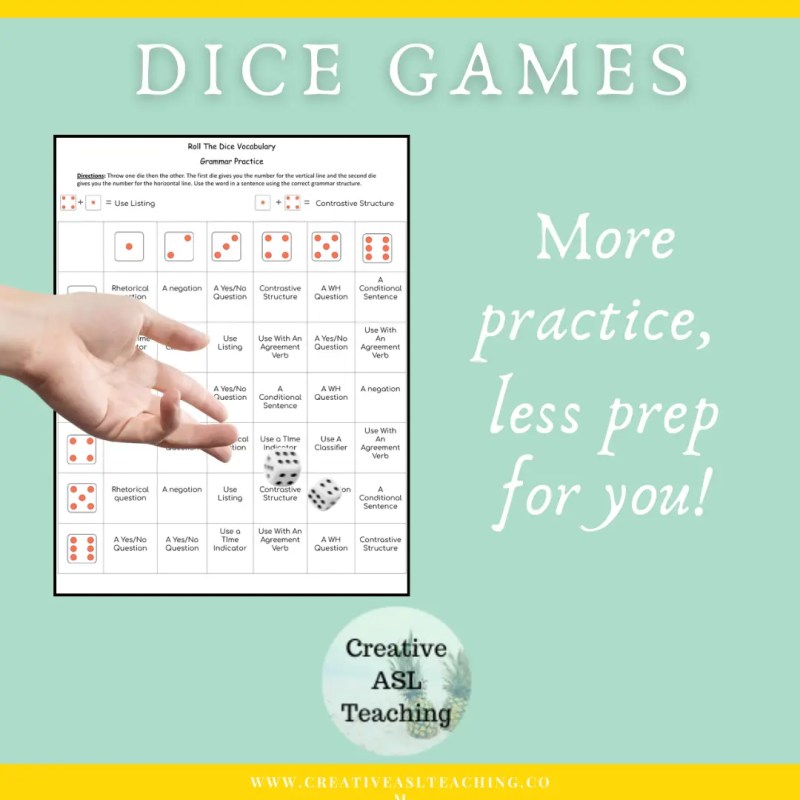
As language teachers, we know students need lots of practice. They need to see vocabulary repeatedly, use it in different ways, and have frequent opportunities to communicate. The challenge is finding activities that give students meaningful repetition without requiring hours of planning and preparation. That is one of the reasons I love dice games.
Dice games are simple, flexible, and easy to adapt to almost any language skill. They can be used for a quick warm-up, partner practice, review, stations, fast finishers, or even a whole-class activity.
Most importantly, dice games give students more opportunities to practice without creating more work for the teacher.
One of the biggest benefits of dice games is that the game stays the same while the language changes. This makes them versatile and easy to use with any content you are teaching.
You can use the same basic game with:
Students learn the routine, so you don’t have to spend time explaining a new activity every time. Once they know how it works, they can get right to practicing. Saving time = more learning.
Dice games are an easy way to get students using vocabulary instead of simply memorizing a list of words. Students can roll the dice, find their word or prompt, and then use it in a variety of ways.
Depending on your students’ level, they might:
The same board can be used with different expectations depending on the level of your students. And dice games make for the perfect review of any vocabulary or content.
Fingerspelling is another skill that benefits from frequent, short practice. You don’t need to spend an entire class period practicing fingerspelling. A 5–10 minute dice activity can give students another opportunity to practice both expressive and receptive skills.
Students can take turns rolling, finding a word, fingerspelling it, and watching their partner. Dice games allow for both receptive and expressive fingerspelling practice at the same time.
That repeated exposure that dice games offer is important for students. The routine and repetition practice the skills students need.
A little fingerspelling practice several times a week can be much more useful than one big practice session before a test.
Need more fingerspelling ideas? Check out these blog posts:
Dice games don’t have to take over your lesson. They can simply become one more tool in your teaching toolbox.
Give students 5–10 minutes to practice with a partner while you take attendance, check in with students, or prepare for the lesson.
Before a quiz or assessment, let students practice in small groups. You can walk around the room and quickly see what students know and what they still need to work on. (Click here to see Dice game review)
Dice games work well for independent or partner stations because students can follow familiar directions without needing constant teacher support. (Click here to see an Upper-Level Fingerspelling Station)
Instead of students asking, “What do I do now?” have a few familiar games available for students who finish early.
You know the days. The schedule changes. You lose 15 minutes. Half the class is absent. You need something for a substitute. Your carefully planned lesson doesn’t go quite as planned. Pop in a ready-made dice game to keep learning happening with no additional prep from the teacher.
Dice games can be that go-to activity you need in your teacher toolkit.
Students need repetition, but repetition doesn’t have to mean doing the same worksheet over and over. Dice add a little unpredictability and fun to practice. Students don’t know exactly what they will roll, what word they will get, or what their partner will do next. They are still practicing the same language skills, but the activity is different each time.
However, you can overdo the dice game if you overuse it. So find that balancing point where students want to use the dice to practice but don’t feel like it is forced. The games need to feel fresh and fun.
I just mentioned not to overdo the dice games, but you can if your students love it. But you can use the dice games in a routine way mixed in with other review games.
Try incorporating the dice games into your weekly routine:
This routine will keep dice games fresh, using them only 2 – 3 days a week while sprinkling in other games to make practice fun.
Little to no prep is why I love dice games. They are inexpensive, easy to explain, and incredibly flexible. They can be used with different levels, different vocabulary, and different language skills at any time in a unit.
Most importantly, they solve a very real teacher problem: How do I give my students more practice without giving myself more work? Sometimes the answer is as simple as grabbing a couple of dice.
Looking for fresh ideas to keep your language classroom active and engaged? The Big Book of Activities for the ASL & World Language Classroom is a collection of simple, flexible activities you can use again and again throughout the school year.
This book is designed to help teachers add variety, movement, and interaction to their lessons without spending hours planning. With 300+ pages and over 100 activity ideas, you will always have something ready to go when you need a new classroom activity.

Creative ASL Teaching has a plethora of dice games to make your planning time easy and add fun to your classroom. Try one of these options to add to your teacher toolkit today!
Fingerspelling Dice Game Boards
Interpersonal COnversation Dice Boards
5 Parameters of a Sign Dice Board
If you have questions, let’s talk in the Creative ASL Teaching Facebook group. Join the conversation in our Facebook group.
Don’t miss out on a sale, FREEBIE, or new product. Follow Creative ASL Teaching on TpT.

There are a few things that I look for in a game. One is that it is engaging and students will be willing to participate.

One thing I love to use in my classroom is stations. They allow me to guide students instead of always relying on direct instruction. Stations

I recently read about a game to practice numbers from Martina Bex. It is called When You Know, You Know. It is f a game

You know I love a good dice game! So, when a colleague shared an instructional strategy with me called Stop, Plop, and Roll, I was

October is the perfect time to bring a little Halloween fun into your ASL classroom! Students are ready for seasonal activities, and teachers are looking

As language teachers, we know students need lots of practice. They need to see vocabulary repeatedly, use it in different ways, and have frequent opportunities
